

Active Sitting, Clearing Microplastics, Retraining Your Palate, Boring Is OK
Lightbulbs & Pearls | 029



Are We Sitting Too Long or Just Wrong?
The other day, as I was driving, I suddenly realized that I was slouching and that my head was protruding like a turtle’s. Egads. What on earth was I doing? I’ve been working on being more attuned to my posture, as that is one of the most outwardly noticeable changes as we age, and I’ve caught myself slouching enough times to put me on notice.
My Pilates instructor’s voice rang in my head: lift your ears up, shoulder blades together (crack that walnut!), stack your ribs over your hips, scoop your core. It was such a huge readjustment that it snapped me into contemplating the way that we sit, and the cascading effect of poor posture on health. Now, I’m obsessively staring at people as they sit, and I’m amazed at how we just melt into whatever we are sitting on.
This got me thinking about the research that kicked off the standing-desk craze, which cast sitting as the new smoking. While the researchers’ conclusions had merit, evolutionary biologists who dig into the subject conclude that we aren’t necessarily sitting longer than our hunter-gatherer ancestors; we are sitting incorrectly.
In fact, according to a landmark study by researchers at the University of Southern California (USC) on the Hadza hunter-gatherers of Tanzania, their total daily downtime is nearly identical to the 9 to 10 hours of sitting seen in modern, industrialized societies. However, they do not suffer from the same cardiovascular and metabolic diseases, let alone back pain, that afflict modern populations.
The team discovered that while the Hadza spend just as much time “resting” as we do, they use active, weight-bearing resting positions like squatting and kneeling rather than our fancy, expensive, ergonomic chairs.
Unlike chair-sitting, this “active sitting” of squatting requires continuous, light-level muscle contractions. This muscle metabolism prevents the dangerous drops in muscle activity that lead to heart and metabolic diseases.
So, how do we actively sit in a modern environment? Some people have stand-up desks and go so far as to have a treadmill underneath. Others sit on the floor at a coffee-table height work surface. Or some opt for backless, balancing stool seats that let you sway, tilt, and swivel, engaging the core and stabilizing muscles.
Although I’ve used an elevated desk and a balancing stool in the past and like them very much, I don’t have them in our home office, so I’ve developed a few alternative strategies. In a nutshell, I try to sit as actively as I can, which means sitting up and not slumping back. I often sit with my legs tucked under, tilt slightly forward so I’m not relying on the back of the chair, and always change positions. Additionally, I get up often to refill my water or just stand in the backyard for a few minutes.
Anything to break up the periods of sitting with movement.
Takeaway: Sitting isn’t necessarily problematic; it’s how we sit that is harming our health.
Take Action: Adopt active sitting practices, change positions frequently, and take movement breaks.

Good News: A Low-Plastic Lifestyle Works to Clear Microplastics
The words “microplastics” and “nanoplastics” have become synonymous with alarming health concerns, and with good reason. These microscopic particles are circulating throughout our bodies and being deposited in our brains, arterial linings, testicles, and who knows where else, creating a slew of health issues, including cellular damage, tissue inflammation, and metabolic disruption.
At first, they may seem nearly impossible to combat given the ubiquity of plastic in our lives, but new research suggests that with targeted lifestyle modifications, we can help rid our bodies of microplastics rather quickly.
Recent research, most notably the Plastic Exposure Reduction Transforms Health (PERTH) Trial at the University of Western Australia, published in Nature Medicine in April 2026, has demonstrated that with just one week of lifestyle changes, the levels of plastic-associated chemicals can be significantly reduced and eliminated through our urine. The study found that switching to a low-plastic lifestyle for 7 days reduced urinary levels of plastic-associated chemicals by up to 60% in 100% of participants! That’s astonishing! And doable!
What does a low-plastic lifestyle look like? It’s easier than you may think. Avoid plastic food packaging; highly processed and plastic-packaged foods were identified as the largest contributors to urinary plastic levels. Canned foods and drinks often contain plastic linings that leach chemicals into their contents, so limit their use as well. Regular Ageosophy readers know I am an unrelenting proponent of using glass or metal for cooking and storage instead of plastic containers, and eliminating non-stick pans significantly lowers intake as well.
Another area to pay attention to is our water. A 2025 study found that boiling and filtering tap water can remove up to 90% of certain nanoplastic particles, especially in “hard” water with high mineral content. A simple carbon filter pitcher can also remove up to 90% of microplastics.
What we eat also matters. Laboratory studies indicate that certain probiotic strains (such as Lacticaseibacillus paracasei, found in fermented foods) can bind to microplastics in the gut, increasing their excretion in waste by up to 34%. Additionally, increasing fiber intake (through foods such as legumes, fruits, and vegetables) promotes regular elimination, helping the body flush out plastics.
A few more meaningful changes are replacing polyester and technical fabrics with natural fibers such as cotton, bamboo, and wool. If you use them, consider swapping plastic toothbrushes, hair brushes, and makeup brushes for natural-fiber ones.
Take a critical look at what is plastic in your life and start making small swaps. It all adds up, and it all matters.
Takeaway: Microplastic accumulation can be mitigated and reversed through lifestyle and diet.
Take Action: Clear out the plastics, eat more fermented foods, and increase fiber intake.

Training Your Palate
Believe it or not, I understand well how hard it is to eat healthy. My current eating habits have evolved over the years; I'm far from perfection, and I’m still adapting.
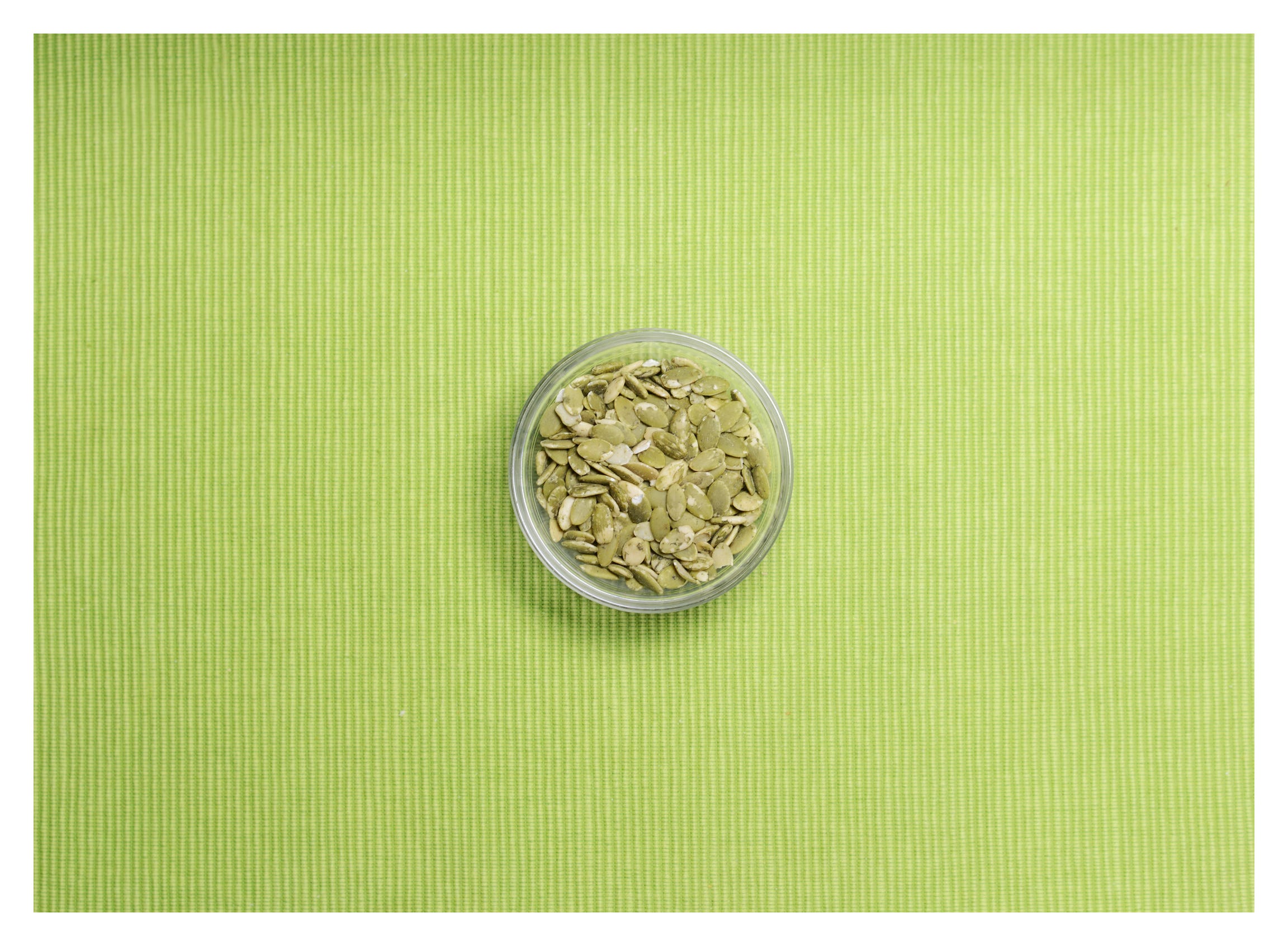
A while back, I fell off my daily habit of eating pumpkin seeds (an amazing superfood containing all 9 amino acids) and instead started eating waaaaaay too many nuts. Nuts are good, but I was overdoing it. So I backed off my nut consumption and decided to reintroduce the seeds. At first, I was taken aback; they weren’t as good as I had remembered. Not bad, just not what I was expecting (and clearly, not what I had grown accustomed to). But I stuck with it, and before long I was looking forward to them again.
There is a real, physiological reason that I once again grew to look forward to and enjoy my morning pumpkin seeds habit. It is entirely possible to reset and recalibrate your taste buds in a relatively short timeframe. 10-14 days to be exact. The cells on your tongue naturally regenerate during this timeframe, so in just two weeks, you can wean yourself off problematic foods and retrain your palate.
For instance, if you’re stuck in an ultra-processed foods addiction—which I believe is the source of most chronic ills—significantly reducing your intake of high-sugar, high-salt, and heavily processed foods will allow your new taste buds to recalibrate and appreciate natural, subtle flavors.
A structured approach will help you successfully navigate the reset process. It would look something like this: Days 1–3: Initial cravings may peak as your brain adjusts to lower dopamine hits from processed foods. Days 3–5: Natural whole foods, such as fruits and vegetables, will start tasting sweeter and more distinct as your baseline shifts. Day 10 and beyond: Your taste receptors completely regenerate, allowing you to fully enjoy and crave a variety of whole foods.
After you’ve recalibrated, consistency will be the key to maintaining your new palate. You will be amazed at how much you can change your tastes.
Takeaway: You can retrain your palate to enjoy healthy food.
Take Action: Replace processed and ultra-processed food with single-ingredient, whole foods to recalibrate your palate

Boring is OK
When my son was a toddler, I had a very bah-humbug attitude towards the sea of fun children’s products, including “fun food” and especially “fun underwear.” Underwear, you ask? Yes, I refused to buy underwear emblazoned with fanciful characters, even beloved personas. He had lots of fun toys and tons of playtime. Why did underwear have to be fun? Why did food have to be fun? I reasoned that if everything in life was fun, he wouldn’t know how to handle rough patches. He wouldn’t know what to do if the devices went down. He wouldn’t know how to handle life.
Time will tell if my logic created the reservoir of character and resourcefulness I was striving for. I do know I cultivated an expectation in his mind of “treat” food versus everyday food. For example, he only buys Lucky Charms for binge-worthy camping trips. Plus, he recently bought himself very sensible bamboo underwear. Small victories, but I’ll take ‘em.
The bigger story is that acclimating to boredom has its benefits. Don’t get me wrong. It’s not a lackluster way of life, but rather a palate cleanse. A respite from the noise. Permission to just be.
There are days when I’ll listen to a wide variety of podcasts all day. Then there are others when I deliberately choose to be alone with my thoughts. To be bored. Daydream. Solve problems. Create.
Boredom is simplicity. There is great beauty and wisdom in simple. It is freeing to appreciate the uncluttered. The uncomplicated. The good. The true. The beautiful.
Sometimes I think my eating habits may be too boring. I eat super simply. (My guilty pleasure is sourdough bread drowned in olive oil.) My next thought is, boring is good. I’m not lured by fanciful, cheerful packaging or engaging colors designed to captivate. I don’t hear food noise. I don’t need fun food that is addictive and ultimately dangerous. I need nutrient-dense, single-ingredient food that tastes good and powers my mitochondria, bolsters immunity, and turns on the good genes.
It may be a little boring. But boring is OK if what I want most of all is to live well, age great.