

Can We Talk About Dying?: Part 2
Strategic generosity maximizes joy for everyone


Thank you to those who are faithful readers; clearly, last week’s “Can We Talk About Dying?: Part 1” wasn’t a comfortable topic for some! Rest assured that this week’s sequel is both reassuring and even joyful. I discussed practicalities in Part 1, but Part 2 is all about philosophies… and how shifting our mindsets can positively affect those we love and, in the process, enrich our long-term wellbeing.
“Die With Zero”
Codified in entrepreneur, fund manager, and author Bill Perkins’s bestseller “Die with Zero” the basic concept is that money should be spent to maximize life experiences and memories, rather than being accumulated indefinitely for an uncertain future. In other words, create and spread joy while you are young and healthy.
I first heard the author being interviewed by longevity expert and podcast host Dr. Peter Attia in January 2023, and the core idea has stuck with me ever since. Bill recommends calculating the minimum amount of money needed for basic survival and using that as a reference point to free up other resources for experiences and giving. He emphasizes spending money on experiences, relationships, and personal goals that bring happiness and enrichment, rather than endlessly delaying gratification for retirement.
Experiences include taking friends and family on unforgettable trips, as well as hosting memorable birthday parties and gatherings for close friends. In his mind, these are like investments that yield “memory dividends” over time, creating positive emotions and stories that can be revisited and shared for years to come.
There is great wisdom in intentionally creating experiences with friends and family, which can be stored in the memory bank for future enjoyment. I have many memories from trips and adventures years ago that still sustain me today. We had neighbors whose parents took their family on several trips each year, and I often thought how lucky they were because of the indelible memories created for their children. However, as Bill Perkins points out, these memories are also a priceless benefit to the grandparents as they age.
He is also a proponent of “strategic generosity.” Instead of leaving a large sum of money to heirs, consider giving to your children when it is most useful for them, such as helping them buy a house or pay for college.
Our strategic givers
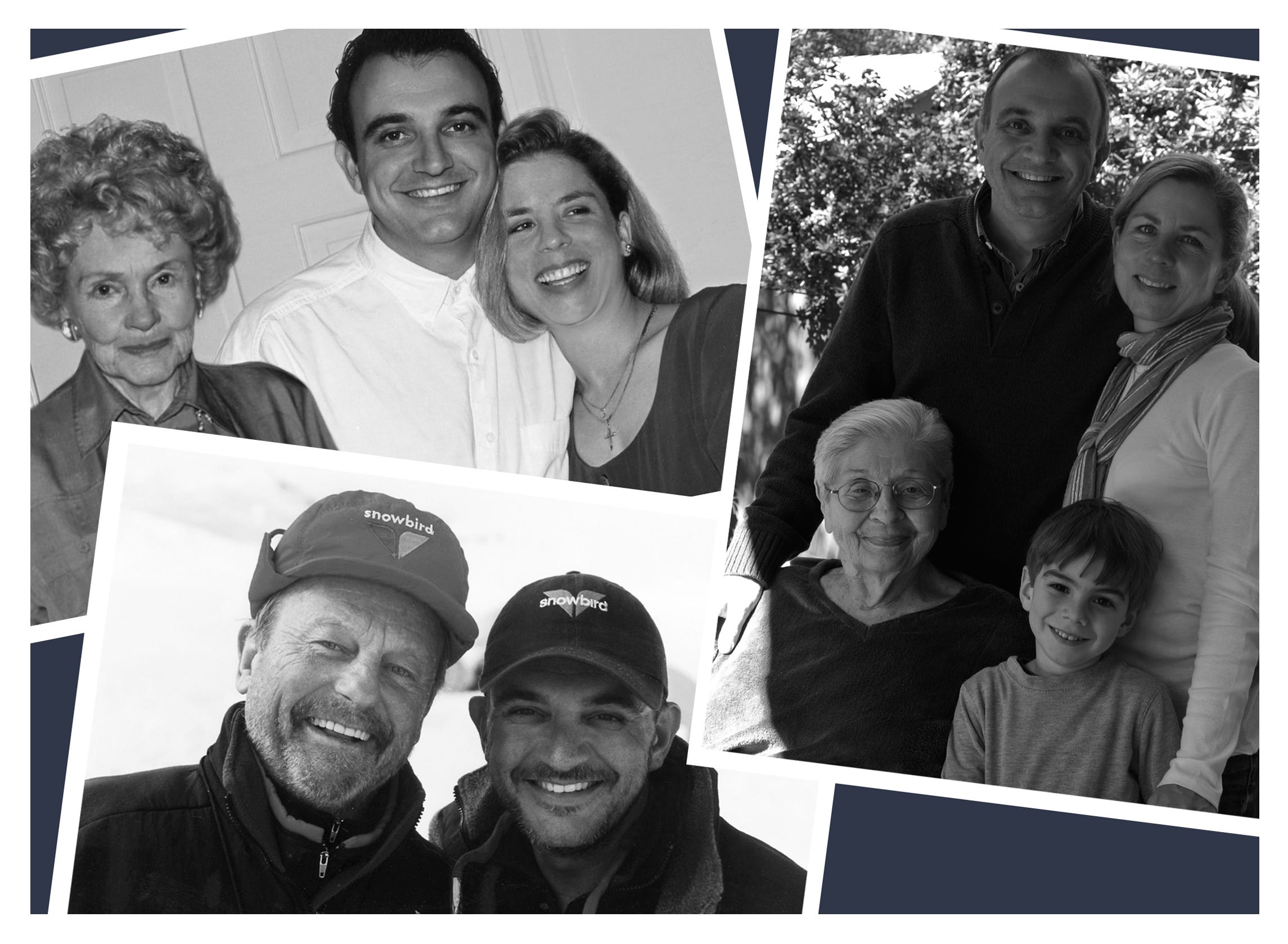
This idea of strategic generosity resonates with me because Andrea and I experienced something similar when we were younger. Our beloved adopted grandmother, Lucille Ryman Carroll, hosted our engagement party and later kindly gifted us a beautiful backyard wedding and reception. We both felt she was getting as much joy from the planning as we were. Although I don’t believe her gratification was the driving motivator, she found great happiness in sharing what she had, and I think it was as much a benefit to her well-being as it was for ours.
Similarly, although my mom had relatively modest means, when she moved in with us, she took great joy in contributing to our household with items that would last us a long time. One such item is a beautiful teak patio dining set. Every time I pass by it or sit down to eat, I fondly remember how happy she was to give it to us; she was truly proud to have been able to help.
Way back in the 1990s, when we were renovating our home and construction loans were becoming downright prohibitive—potentially shutting our project down—Andrea’s father stepped in with much-needed “pre-inheritance” assistance; monies he had earmarked for Andrea in his will, but which were of much greater use to Andrea at that time rather than years later.

Lastly, Andrea and I were the recipients of fairy-tale generosity. Entrepreneur and owner of Snowbird, Utah, Dick Bass, was Andrea’s beloved Dutch uncle. He was fond of saying, “Blessings shared are multiplied,” and he had a very generous, sharing spirit. Back in the 1980s, Dick procured an unbelievable golden ticket offered by American Airlines called the World Pass, which enabled Dick (and a companion) to fly anywhere in the world first class for the rest of his life.
And fly he did. Dick flew like people drive. Everywhere. His companion from time to time was Andrea, who was always up for an adventure. Utah. Switzerland. Italy. England. Africa. Antarctica. Experiences he cherishes to this day. I, too, had a once-in-a-lifetime experience with Dick when we flew to Switzerland to meet Andrea for an important dinner. Long story for another time, but it is one of the memories that sustains me to this day.
As I listened to the podcast, I reflected gratefully on our giver’s intuitive generosity and the roadmap of joy they gave Andrea and me. These magnanimous acts of kindness were not handouts, but rather heartfelt gifts that benefited the giver and recipient at the most opportune times.
The “Happiness Experiment”
Visionary entrepreneur and philanthropist Carl B. Barney similarly identifies the joy of intentional giving in his “Happiness Experiment: Designing Happiness. Transforming Lives” More than just a book, it presents a philosophy of living to achieve the ultimate happiness. Born out of gratitude, philosophy, and a near-death experience, Carl created a practical guide for planning happiness based on the idea of pre-quests (gifting before your exit from this world), using your resources—whether wealth, time, or care—to enrich the lives of those you care about and your own in the process.

A mid-air explosion aboard a plane literally rocked Carl’s world and created a life-defining moment. As the plane was suddenly hurtling towards a seemingly inevitable end, a flood of thoughts raced through his mind; Carl realized something extraordinary: “If this is it, why didn’t I plan to live better?”
That extreme moment of clarity transformed his perspective. Carl realized that happiness isn’t luck; it’s planned—underpinned by reason, purpose, and intention. This was the genesis of the Happiness Experiment, through which he gifted “Gratitude Grants” to twenty of his friends, with the caveat that they use the funds to change their lives.
But he didn’t leave it to chance. He assisted those who accepted his once-in-a-lifetime offer by providing a step-by-step blueprint to identify their core values and design their future, along with a supportive coach to offer the clarity and guidance needed to help them fulfill their dreams.
Although I haven’t read the book yet, I did listen to a couple of interviews, and from what Carl relayed, he was successful in his quest to impact the trajectory of his friends’ lives in a profound and meaningful way.
Practical application
Granted, both of these men have considerable wealth that enabled their out-of-the-box thinking and execution, but that doesn’t mean that we can’t learn from them and borrow core concepts to apply to our own lives.
For example, although all the pre-quest participants had wildly different goals for their gratitude grants, Carl discovered a common thread of happiness: the joy that people derived from planning. People are innately adventurous and creative. I feel energized when planning a project or trip, even if it’s months or years away from fruition. The goal is like a winch pulling me forward.
Conversely, enabling people to make such transformational changes in their lives, in turn, immeasurably enriched Carl’s own life in ways he hadn’t imagined.
We don’t need to be verging on billionaire status to apply the same thinking. Making early distributions to family and friends is a calculated risk, but careful planning gives the risks purpose and ultimately makes them more manageable. Be it a sturdy patio dining set, a dream vacation, or even a new home, we can confer meaningful gifts to our family and friends.
Being kind doesn’t cost anything
Not everything you impart or leave behind is monetary. As Andrea and I walked this morning, we reminisced about our neighbor, Don, from the first decade we lived in our home. What started as a friendly relationship became very contentious when our neurotic chocolate lab, Teggio, developed a barking habit from the time we left for work until we got home… or so we were told. No doubt, incessant barking is a nuisance, but once we were aware of the problem, we tried desperately to fix it. Sadly, Don lost his patience and would shout down from his window the moment I stepped out of my car in our shared driveway. I dreaded coming home. My stomach would tighten the minute I got off the freeway, knowing I was just a few minutes away from being scolded. Again.
I’ve often thought about what a sad legacy Don left behind, given how downright mean he was to us and the immeasurable stress we experienced during that time. A little bit of kindness would have been a welcomed gift!
In addition to the good you can do with money, you can do much the same with how you treat people… and it doesn’t cost a dime.
Live well to die well
Circling back to my dear Lucille, in the last 15 years of her life, she spent her wealth enriching the lives of others. Aside from her generosity to Andrea and me as well as her caregivers, she used her own money to create a foundation and program in honor of her late brother, Disney Legend and artist Herb Ryman. Since 1990, Ryman Arts has engaged over 41,500 young artists with classes and outreach, with more than 95% of its graduates going on to college and many working in creative industries…thanks to Lucille.
The examples set by Lucille, my mom, Andrea’s dad, and Dick were invaluable blessings, for which I am truly thankful, and I hope to inspire you, as well. Living to leave positive footprints and a legacy of happiness is definitely a priority in my journey to live well, age great.