

Less May Yield More
What you don’t do has the greatest impact on health


The other day, as my husband, Andrea, was getting ready, he casually asked if I had noticed that he no longer had the eczema/rosacea that had plagued him for years. It was never terrible, but it was primarily on his face, which made him self-conscious enough to regularly visit a pricey Beverly Hills dermatologist to eliminate the problem. The collection of washes, ointments, and creams—or “lotions and potions,” as we called them—was a fixture on the bathroom counter.
And they weren’t cheap. I winced every time I picked up one of the prescriptions, even with a co-pay. But Andrea was bound to the regime that kept the embarrassing scaly red flares in check. Mind you, it didn’t eliminate them, just managed them.
Small is big
It’s been at least 15 years since he went to the upscale dermatologist, and I can’t remember the last time Andrea had to use one of the ointments he kept around for good measure. It’s been such a gradual weaning off process that I almost forgot about the issue.
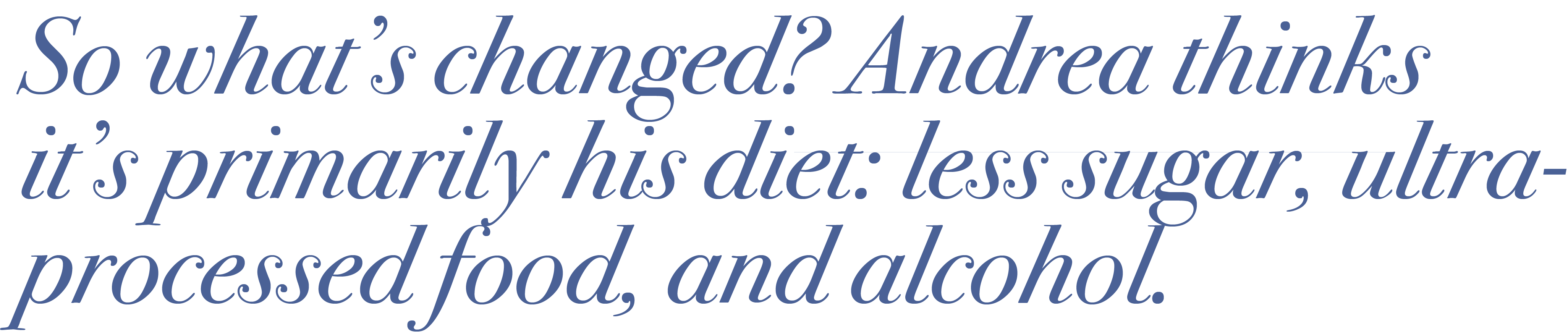
So what’s changed? Andrea thinks it’s primarily his diet: less sugar, ultra-processed food, and alcohol. While I agree that that diet has been the primary driver, there have also been a handful of micro-changes. He ended his monthly business travel, which was a nutritional and environmental rollercoaster. I stopped dry cleaning his clothes many years ago and now make our own laundry detergent. It could be that the shower soap is milder than it was a decade ago. Plus, over the years, we’ve removed many chemicals and toxins from our home and everyday life.
While it’s tricky to pinpoint precisely what eliminated his skin issues, it’s clear that it wasn’t the lotions and potions. Small eliminations have added up to big improvements.
Less is more
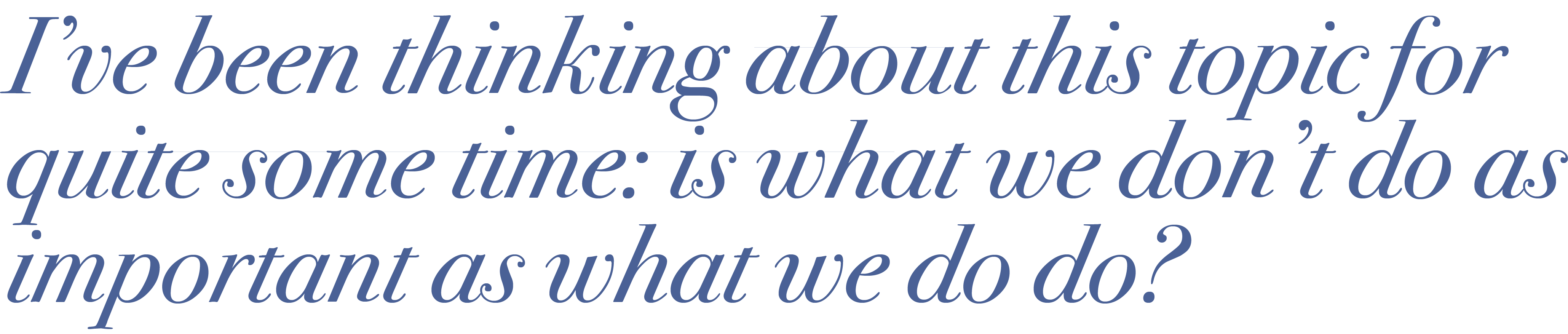
I’ve been thinking about this topic for quite some time: is what we don’t do as important as what we do do? (Is that correct English?!) I’ve had this nagging thought that people are caught in a circular cycle of damage/repair/damage/repair across many areas of their lives—a ceaseless hunt for the solution to a collection of little issues.
As an example, let’s stay on the topic of skin. I don’t think I’ve relayed this before, but I almost became an esthetician instead of a designer. When I was a teenager, I was fascinated by and quite enamored with all things skincare. Still am. I know this may sound strange, but I love reading ingredient listings, learning about new products, and exploring small founder brands.
In my perusal, I’ve wondered: does this unprecedented selection of products lead to the conditions they are trying to solve? For instance, there are a mind-numbing number of cleansers, toners, and scrubs. I’ve started to think the majority may do more harm than good, disrupting the microbiome and imbalancing the pH. In response, people try to soothe the now hyper-sensitive or dry skin with expensive moisturizers. Have we so compromised our skin’s natural protective barrier with all the products we apply that we are in an endless round-robin of disruption and repair?
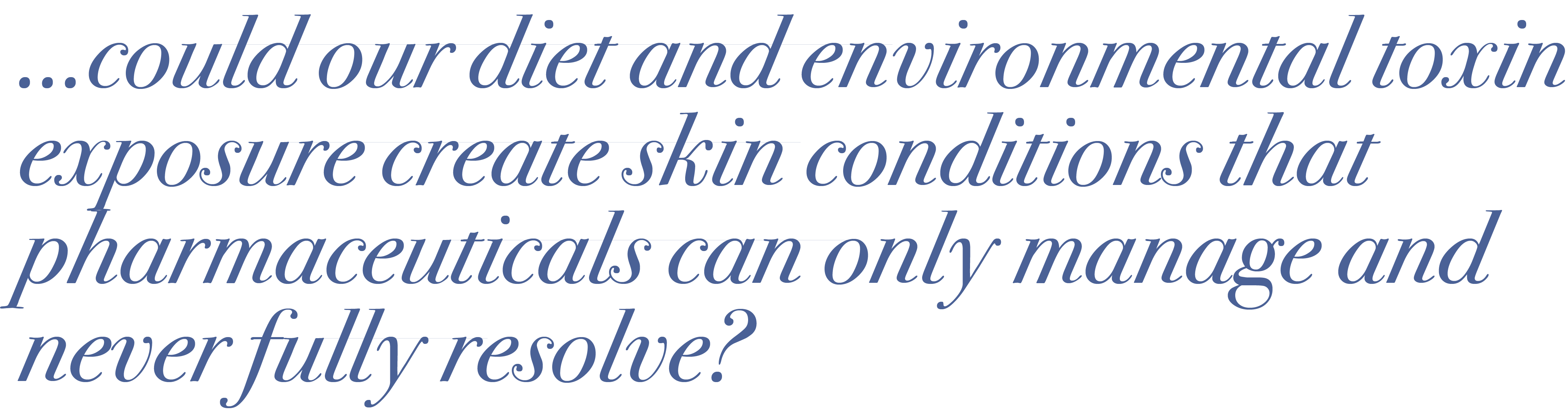
Or, as in Andrea’s case, could our diet and environmental toxin exposure create skin conditions that pharmaceuticals can only manage and never fully resolve?
As another example, our scalp produces natural oils that nourish the hair and scalp, act as a protective layer against environmental stressors, coat the hair cuticle, and add softness and shine. Yet, by neglecting to nurture the scalp’s natural oils in favor of formulated haircare products, I wonder whether we have either downregulated or overproduced these oils, or triggered a whole host of inflammatory responses, which we then try to manage with yet more products.
What if we did the bare minimum in haircare? On a personal note, I have significantly scaled down my routine and changed a few habits, and my hair is responding well. I don’t use traditional shampoo or styling products. I wash once a week (which was normal in the 1950s) with a minimal-ingredient bar shampoo, then swipe a conditioner bar across it and rinse with a mix of apple cider vinegar and cold water in a bottle. That’s it—no other styling products. And my hair seems to be quite happy.
Recently, I received an all-natural boar-bristle brush, and I’m going to run an experiment based on the Victorian-era adage to brush hair 100 strokes every night to distribute natural scalp oils down the hair shaft, remove dirt, and stimulate the scalp. My hair has super frizzy tendencies that I’ve never been able to entirely solve, so I’m hoping to tame them naturally. I’ll let you know how it goes.
Avoidance may ameliorate chronic ailments
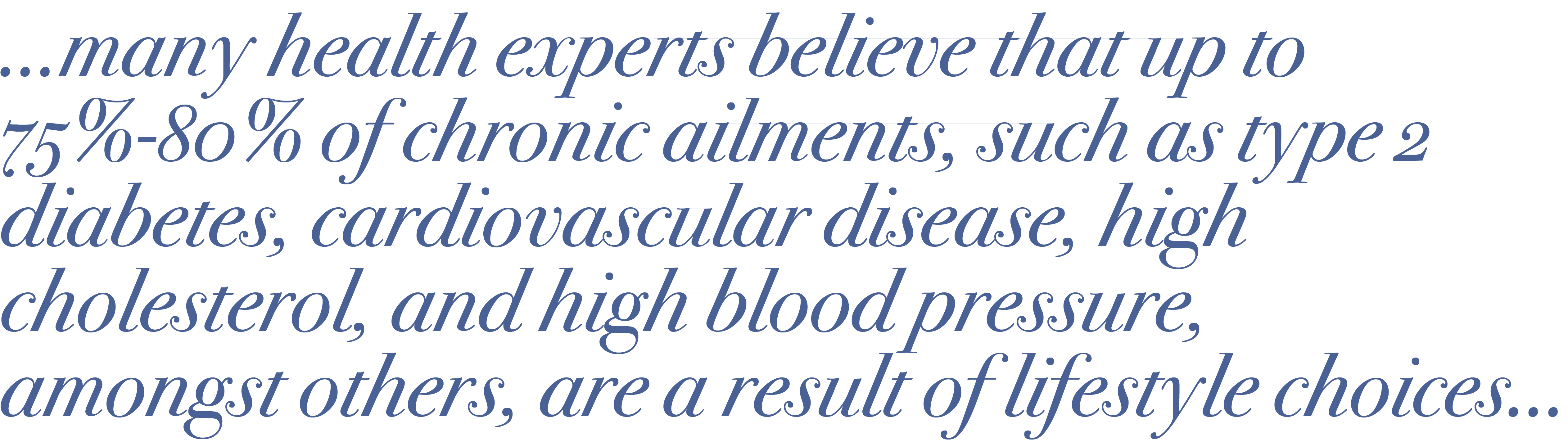
Moving on to health in general, many health experts believe that up to 75%-80% of chronic ailments, such as type 2 diabetes, cardiovascular disease, high cholesterol, and high blood pressure, amongst others, are a result of lifestyle choices that cause systemic chronic inflammation and mitochondrial dysfunction.
Case in point is my newly 19-year-old son. No, touch wood, he doesn’t have a chronic disease (although statistics for young people contracting disease at earlier ages are alarming). Still, he struggles with sinus issues and copious excess mucus from allergies, and often has a morning cough. I was just having this conversation with him; he said everyone he knows has a cough (granted, this is probably an exaggeration) as he chomped on French fries and drank a root beer. Cheekily, I said, “I don’t! But then again, I don’t eat junk food.”
I am embarrassed to admit that my son has what I consider to be atrocious eating habits. Thankfully, I’m able to get a homemade dinner into him most of the time, but aside from a few whole-food lunches, he eats a ton of processed and fast food with his friends. I’ve tried to impress upon him that the root cause of his sinus problems is most likely the inflammation in his body, brought on by sugar, ultra-processed ingredients, and an unusually heavy use of fragrances—he LOVES colognes and aromatic products. I’ve been in a losing battle trying to counteract his lifestyle with supplements, humidifiers, nasal rinses, and saline sprays. At his know-it-all age, he just doesn’t believe me. Yet.
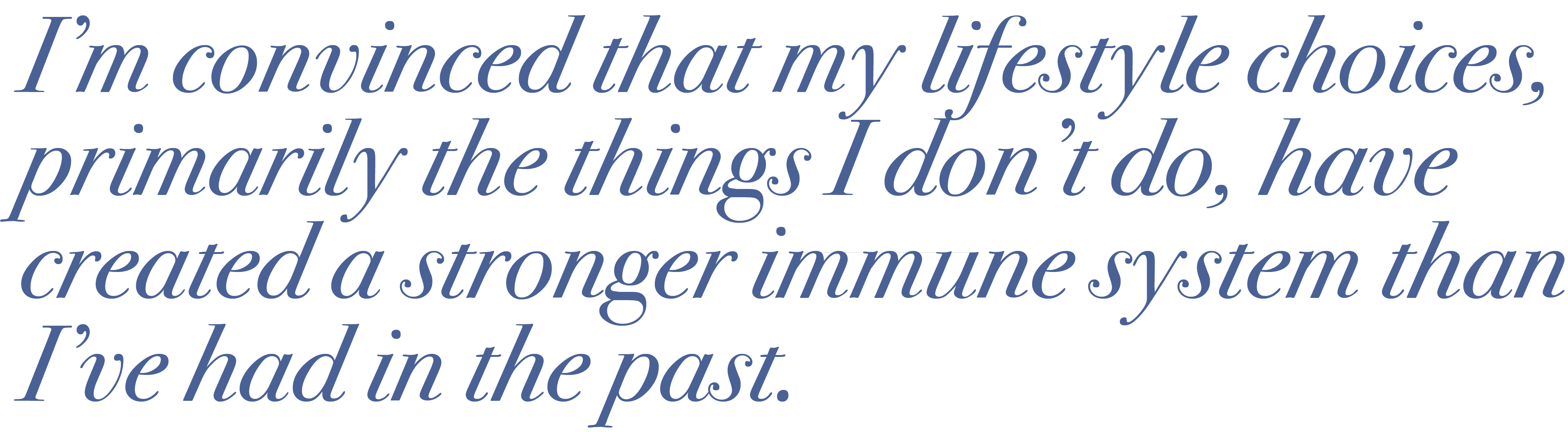
While I’m not saying Alessio’s habits are solely responsible for sinus issues, I do believe they significantly contribute to a chronic issue. Since childhood, my Achilles’ heel has been my sinuses, and I used to get colds very easily. But over the last handful of years, I’ve rarely succumbed to whatever’s floating around in our house. I’m convinced that my lifestyle choices, primarily the things I don’t do, have created a stronger immune system than I’ve had in the past.
Although it’s very difficult to block out the noise of all the quick-fix merchandise, before spending buckets of money on supplements, therapies, lotions, and potions, focus on what not to do to give your body the best chance to repair, restore, and thrive and live well, age great.
My “don’t” list
Below is a partial list of my “don’ts” that have made the most impact on my health. I hope you find a few practices not to do!
Environmental
• Don’t use cleaning or personal care products with synthetic fragrance
• Don’t use cleaning or personal care products with synthetic chemicals
• Don’t cook in non-stick, aluminum, or anything coated
• Don’t cook or bake with plastic utensils
• Don’t store, eat, or drink food and beverages in plastic
• Don’t use synthetic chemical pesticides
• Don’t use synthetic or fragranced detergents
• Don’t brush or rinse with fluoride
Food and beverage
• Don’t consume ultra-processed food and fast food
• Don’t consume packaged food with over 3-5 ingredients
• Don’t consume food with synthetic colors
• Don’t drink alcohol
• Don’t consume sugar
• Don’t eat within 3 hours of bedtime
• Don’t eat fried food
Lifestyle
• Don’t sleep less than 7 hours a night
• Don’t let a day go by without movement
• Don’t sit longer than an hour without getting up
• Don’t use sunscreen daily (this may be controversial, but for everyday, I get very limited mid-day sun and I depend on covering up instead.)
• Don’t wear plastic materials
• Don’t doomscroll
• Don’t use devices past 7:00 and don’t have them in the bedroom
• Don’t use wireless earbuds